AI Voice Receptionist for 24/7 Lead Capture
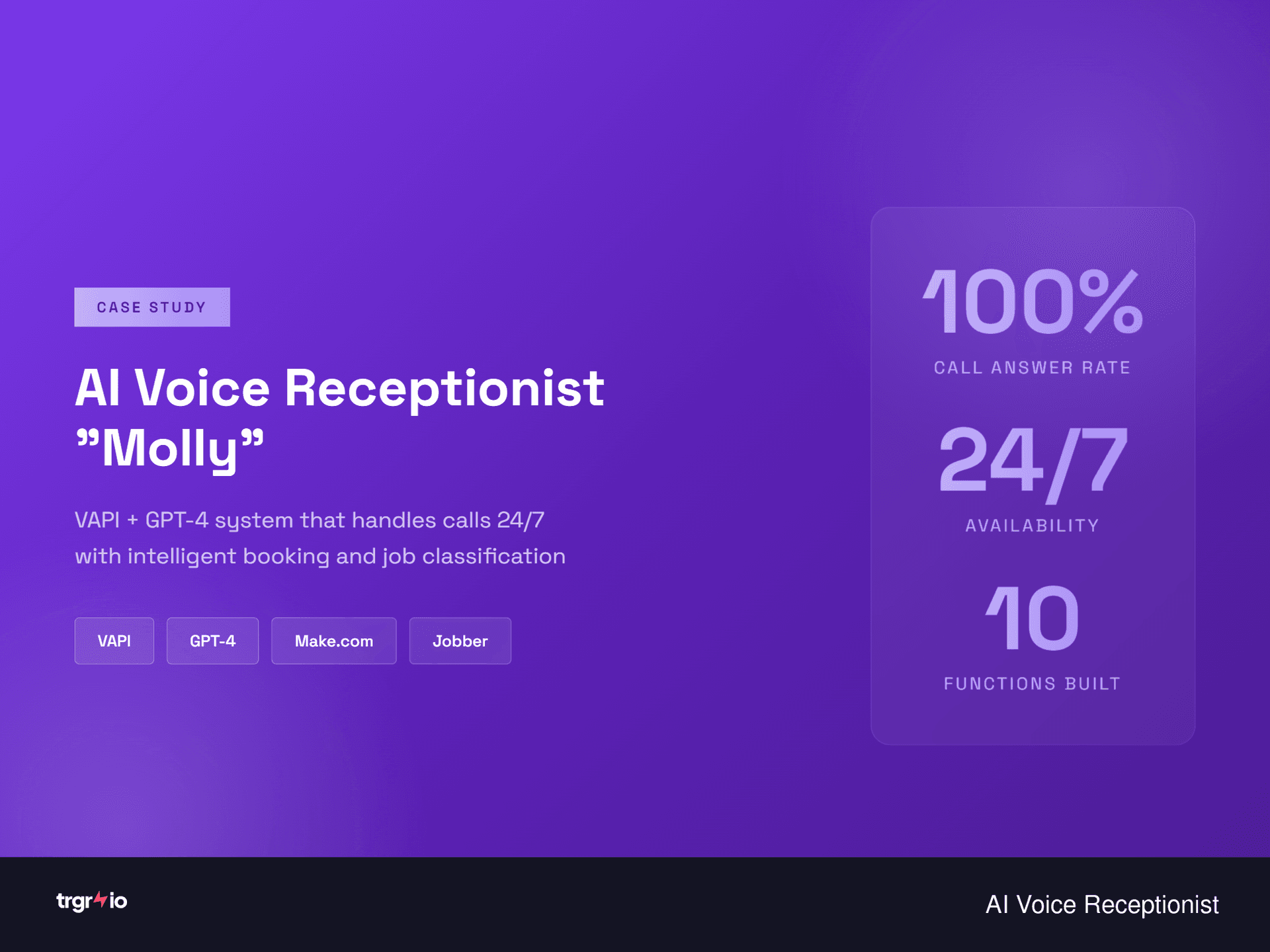
Replaced manual phone handling with AI receptionist, achieving 100% call answer rate and automated booking.
The Challenge
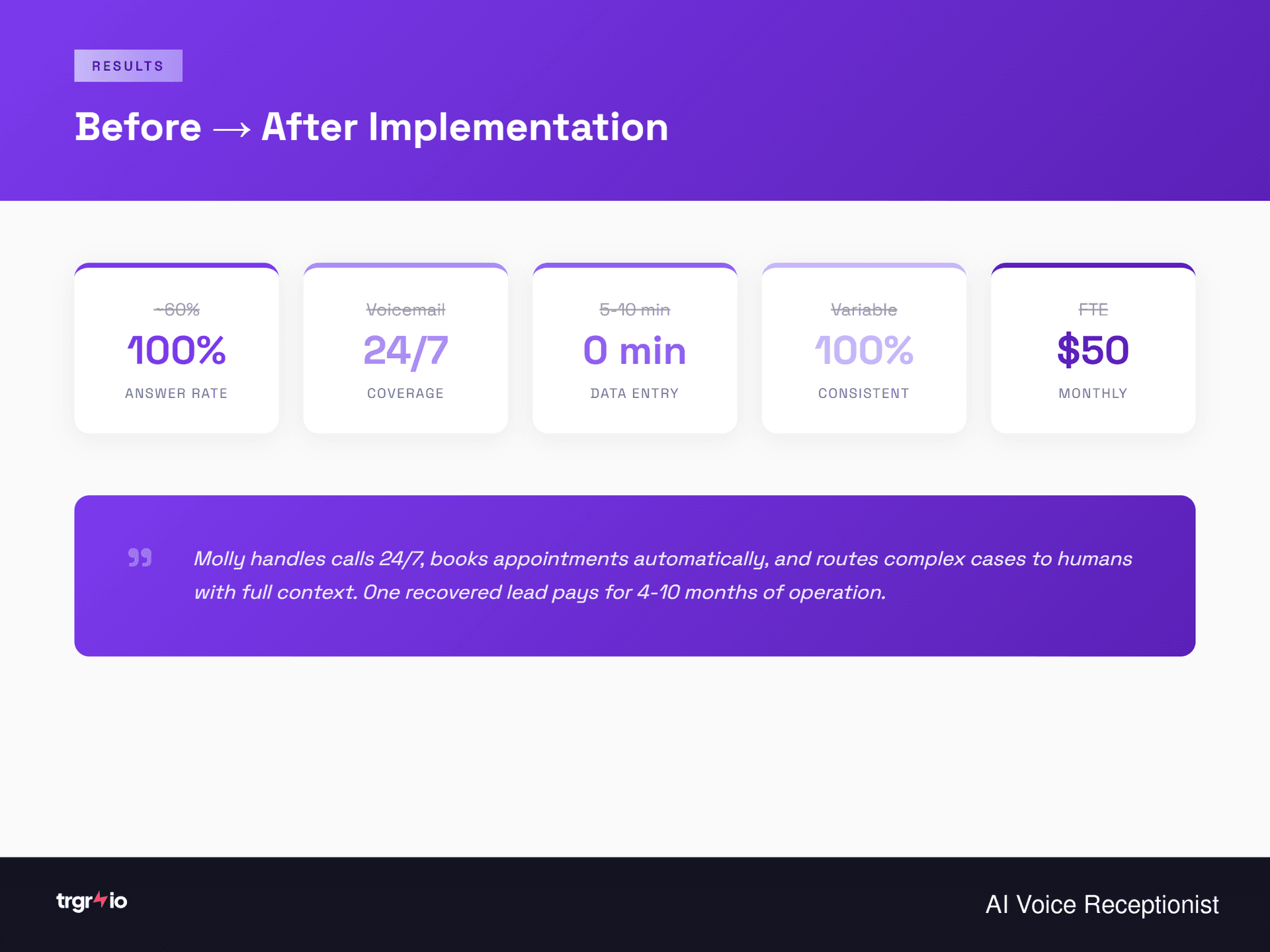
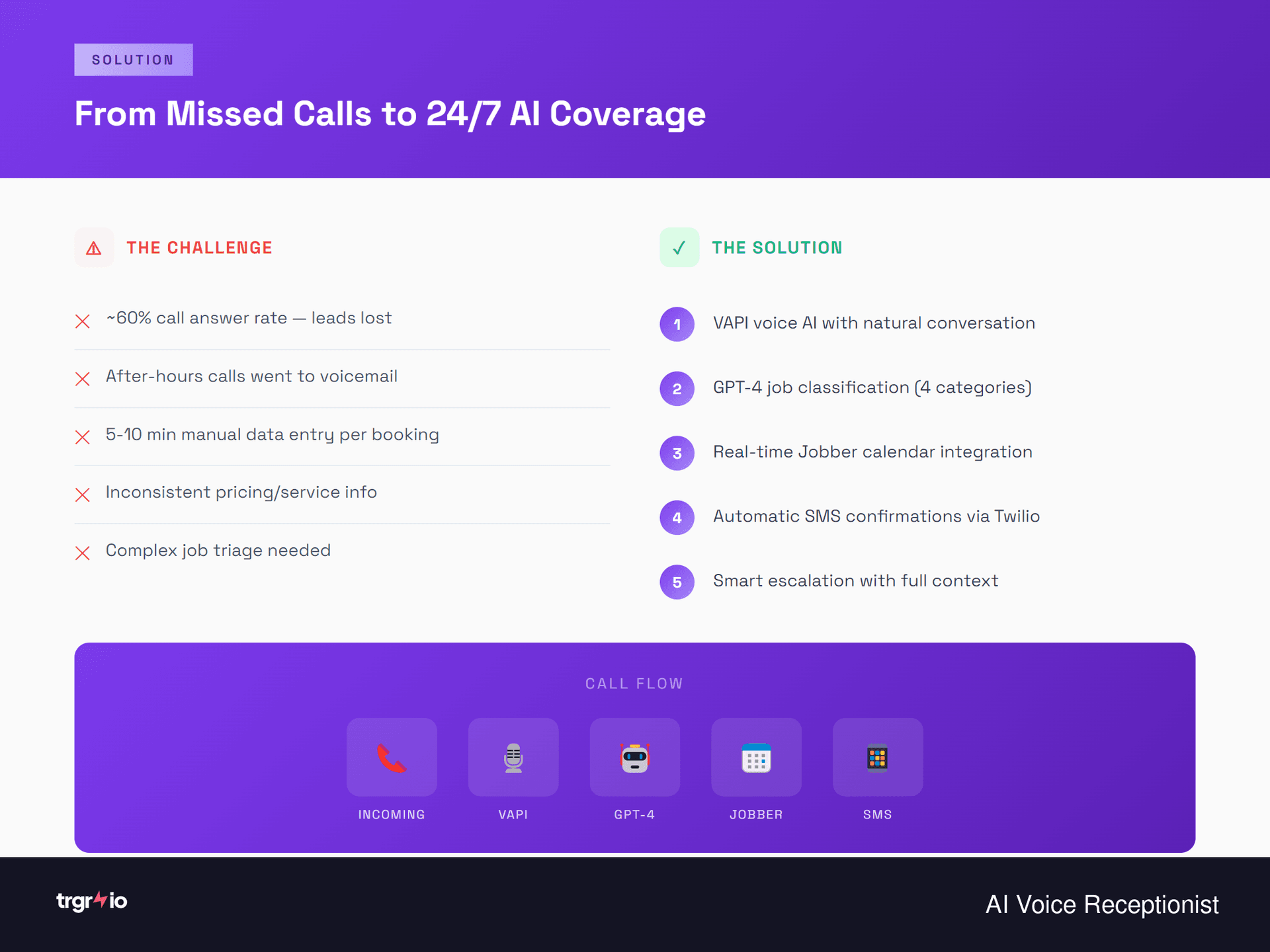
A growing home services company with 12 field technicians was hemorrhaging leads — roughly 40% of inbound calls went unanswered because techs were on ladders, under sinks, or driving between jobs. After-hours calls (which accounted for 30% of total volume) went straight to a generic voicemail that fewer than 15% of callers bothered to leave a message on. When calls were answered, manual booking took 5-10 minutes per customer with staff fumbling through paper price lists, often quoting inconsistent rates for the same service. The owner estimated they were losing $8,000-12,000/month in missed opportunities alone, and the inconsistent customer experience was hurting their Google reviews.
Our Solution
We built an intelligent AI voice receptionist powered by VAPI and GPT-4 that handles every inbound call 24/7 with natural, human-like conversation. The system greets callers by analyzing caller ID against the existing CRM, asks qualifying questions about their service needs, and classifies jobs across 4 service tiers (emergency, same-day, scheduled, and consultation). It integrates directly with their scheduling platform to book appointments in real-time, checking technician availability and travel zones. After booking, it sends instant SMS confirmations with appointment details, technician name, and estimated pricing. For complex requests outside its scope, it warm-transfers to the on-call manager with a full call summary. We also built a daily digest email showing call volume, booking rates, and missed-call recovery metrics.
Detailed Approach
We started by recording and transcribing 40+ real customer calls to understand conversation patterns, common questions, and edge cases specific to the home services industry. This corpus became the foundation for our GPT-4 system prompt engineering, which we iterated through 6 versions before landing on the right tone — friendly but efficient, knowledgeable but not robotic.
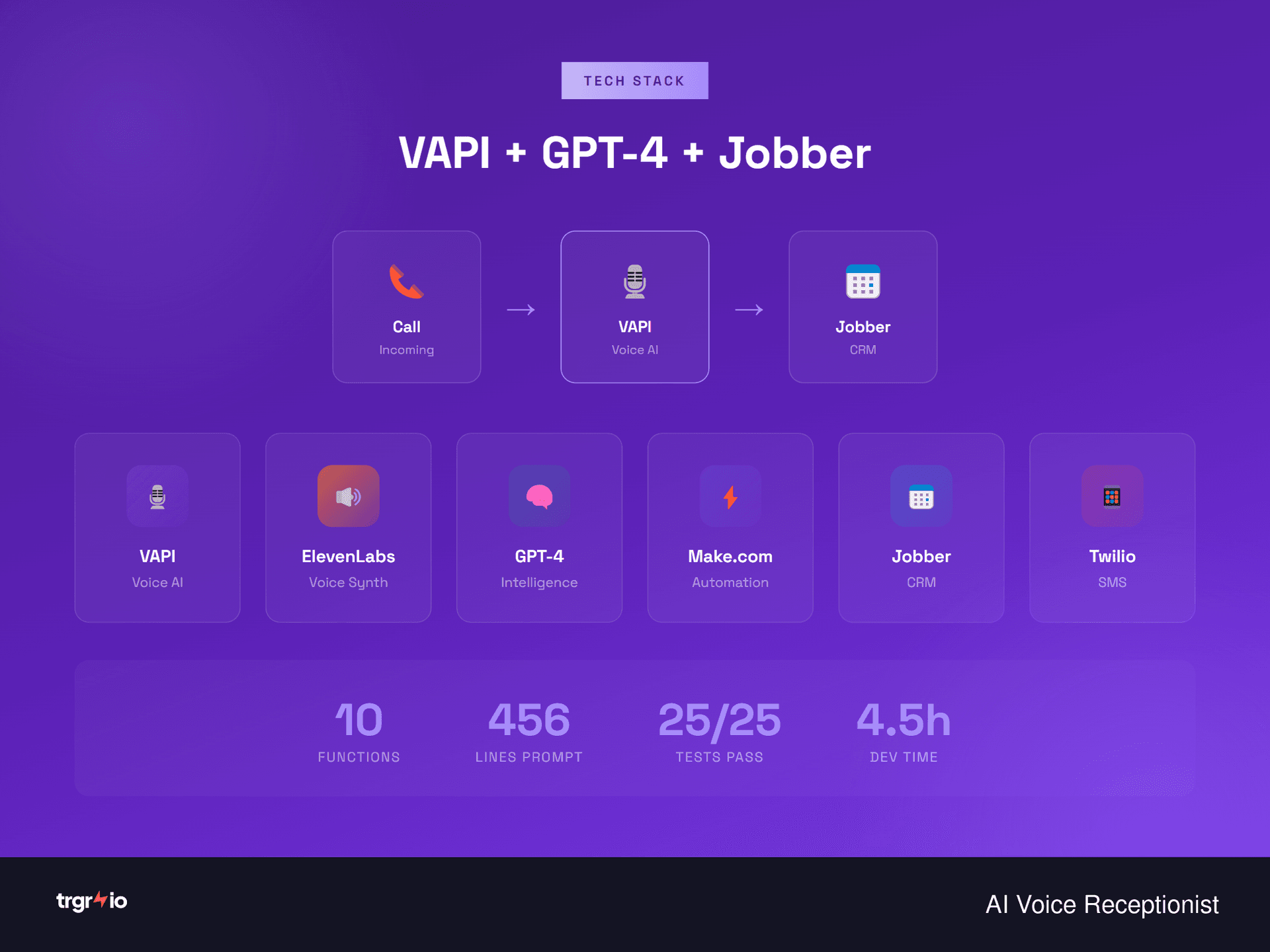
The technical architecture centers on VAPI as the voice orchestration layer, with Twilio handling telephony and ElevenLabs providing natural-sounding voice synthesis. We built a Make.com workflow with 14 modules that handles the post-call logic: CRM lookup, appointment creation, SMS dispatch via Twilio, and logging to a Google Sheet for the daily digest. The scheduling integration required building a custom availability engine that accounts for technician skills, service zones, and buffer time between appointments.
We implemented a confidence scoring system where the AI rates its own understanding of each call on a 1-5 scale. Calls scoring below 3 get automatically flagged for human review, and we used these flagged calls during the first month to continuously refine the prompt. The fallback-to-human mechanism uses a warm transfer with a whispered summary so the manager has full context before picking up.
Key Results
🕐 Discovery and requirements gathering took 1 week- ✓100% call answer rate, up from 60% — zero missed calls in the first 90 days
- ✓Average call handling time reduced from 7 minutes to 2.5 minutes
- ✓38% increase in monthly bookings within 60 days of launch
- ✓$9,400/month in recovered revenue from previously missed leads
- ✓Customer satisfaction score improved from 3.8 to 4.6 stars on Google
- ✓After-hours bookings now represent 28% of total appointments
Discovery and requirements gathering took 1 week. The full build — including voice persona design, CRM integration, and testing across 50+ call scenarios — was completed in 3 weeks. We ran a 2-week shadow period where the AI handled calls alongside staff before going fully live.
Technology Stack
Learn More
Dive deeper into the strategies and frameworks behind this project:
Related Services & Industry
Next
Send the week you keep repeating.
Ops Assessment. If this pattern is yours, we will say so.
Pull the trgrAssessment · $999