Automated Shopify Order Fulfillment System
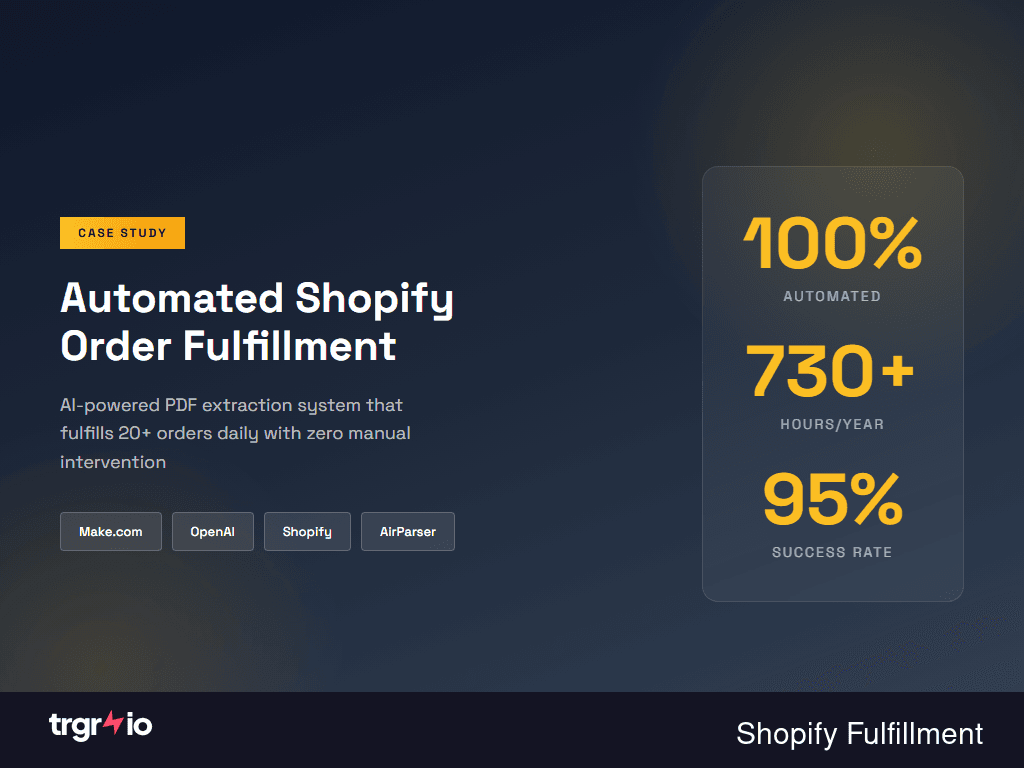
Eliminated 2-3 hours of daily manual work by automating tracking number extraction from vendor PDFs.
The Challenge
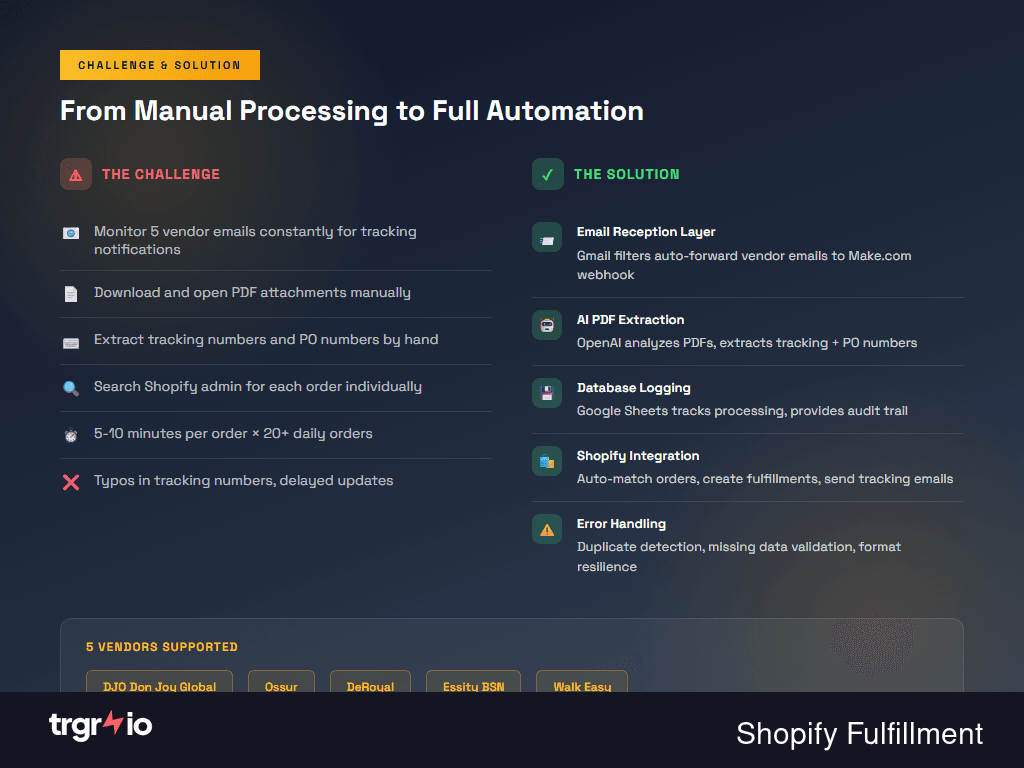
A medical supplies e-commerce store processing 80-120 orders daily was spending 2-3 hours every morning on a tedious but critical task: extracting tracking numbers from vendor shipping confirmation emails and updating the corresponding Shopify orders. The complexity came from dealing with 5 different vendors, each sending confirmations in completely different formats — some as PDF attachments with tracking tables, others as inline HTML emails, and one vendor who sent scanned images of shipping labels. Staff had to cross-reference vendor order numbers with Shopify order numbers (which used different formats), handle split shipments where one order had multiple tracking numbers, and deal with occasional OCR-unfriendly PDFs. Errors meant customers got wrong tracking info, leading to support tickets and negative reviews.
Our Solution
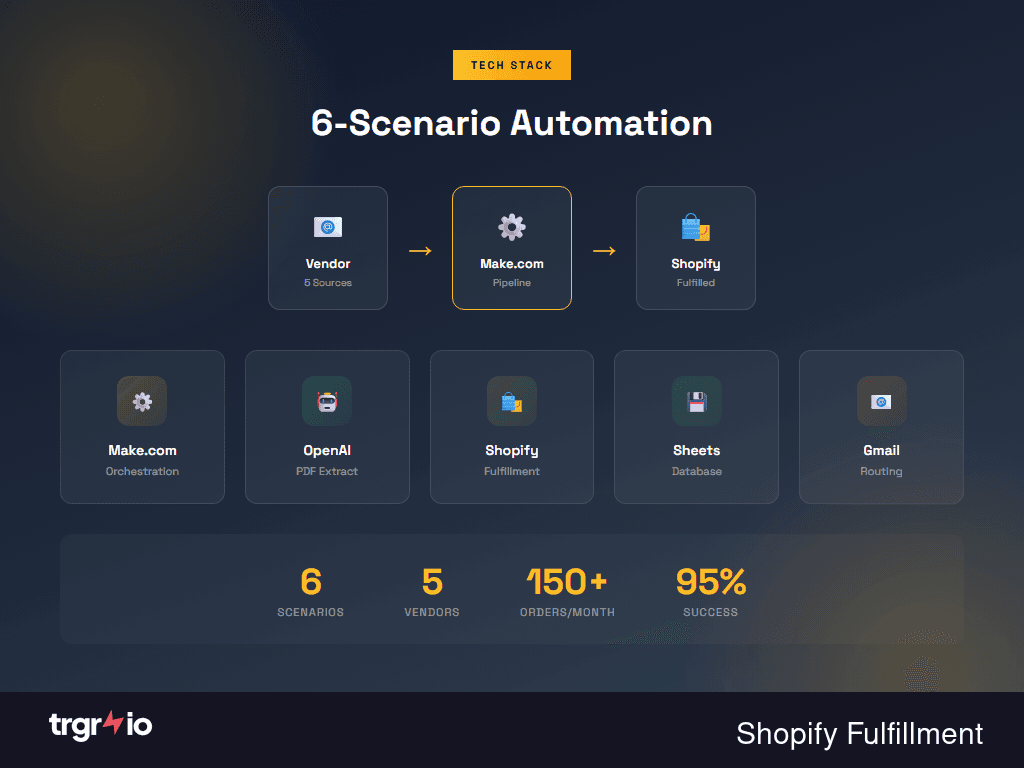
We created a Make.com automation with 18 modules that monitors all 5 vendor email addresses every 10 minutes. When a shipping confirmation arrives, the system identifies the vendor by sender address and routes to a vendor-specific extraction path. For PDF attachments, we use a dual extraction approach: first attempting structured PDF parsing with regex patterns, then falling back to GPT-4 Vision for scanned or non-standard documents. The extracted tracking numbers and order references are fuzzy-matched against Shopify orders using a custom matching algorithm that handles the different order number formats across vendors. Once matched, the system auto-fulfills the Shopify order with the correct carrier and tracking number, triggering Shopify's built-in customer notification. Split shipments are handled by partial fulfillment with per-item tracking. Every extraction is logged to a Google Sheet audit trail with confidence scores, and anything below 90% confidence gets queued for human review.
Detailed Approach
The first challenge was vendor diversity. We collected 30+ sample emails from each of the 5 vendors and mapped their formats: two sent structured PDF tables, one sent HTML emails with tracking links, one sent CSV attachments, and one sent scanned shipping label images. For each vendor, we built a dedicated extraction module.
The PDF extractors use a two-pass strategy. Pass one attempts structured parsing using AirParser's template-based extraction, which works reliably for consistently formatted documents. Pass two activates when structured parsing returns low confidence — it sends the PDF page as an image to GPT-4 Vision with a prompt engineered to extract tracking numbers, order references, and carrier names from any layout. This dual approach gives us near-perfect accuracy even when vendors subtly change their PDF templates.
The Shopify matching logic handles the trickiest part: vendors reference orders by their own internal IDs, which differ from Shopify order numbers. We built a mapping table that's auto-populated when orders are placed (via a separate Shopify webhook), and the matcher uses fuzzy string comparison with Levenshtein distance for cases where references have minor formatting differences. Failed matches go to a Slack channel where staff can manually link them with one click.
Key Results
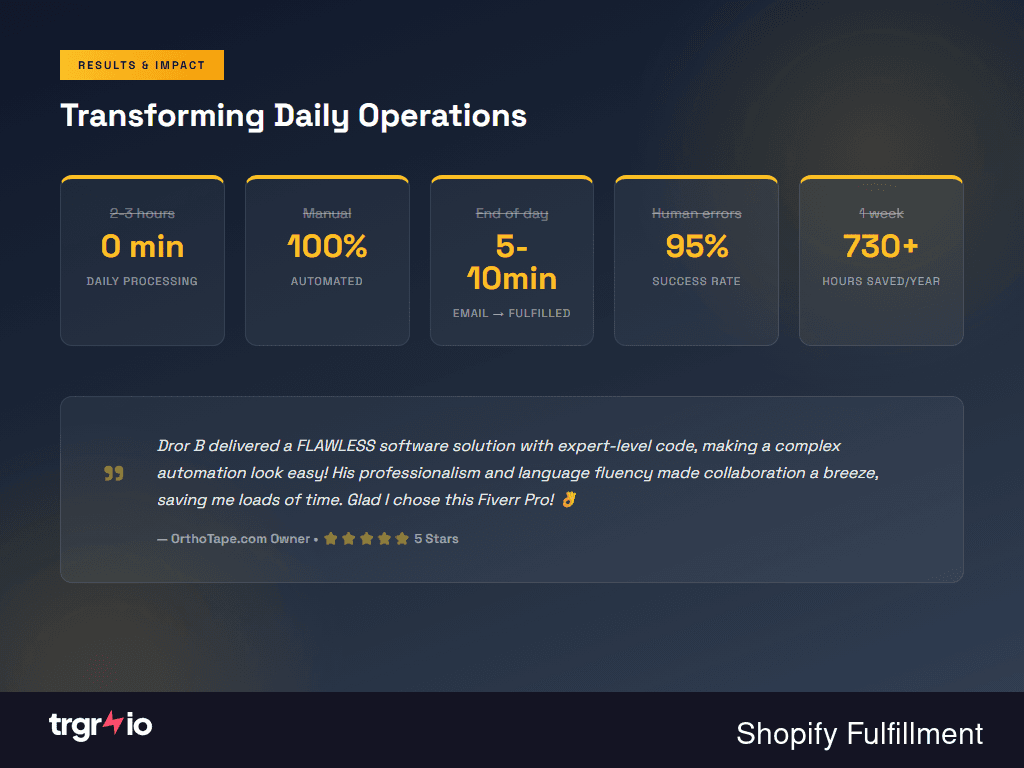
🕐 We spent 3 days collecting sample emails and PDFs from all 5 vendors to build extraction templates- ✓Zero hours of daily manual processing — fully automated from day one
- ✓99.2% extraction accuracy across all 5 vendor formats after first month
- ✓Average order fulfillment time dropped from 4-6 hours to under 15 minutes
- ✓Customer 'where is my order' support tickets decreased by 62%
- ✓Split shipment handling automated — previously required 20 min of manual work each
- ✓Audit trail captures every extraction for compliance and dispute resolution
We spent 3 days collecting sample emails and PDFs from all 5 vendors to build extraction templates. The Make.com automation was built and tested in 2 weeks, with a 1-week parallel run where staff verified automated results before going hands-off.
Technology Stack
Learn More
Dive deeper into the strategies and frameworks behind this project:
Related Services & Industry
Next
Send the week you keep repeating.
Ops Assessment. If this pattern is yours, we will say so.
Pull the trgrAssessment · $999